
Contigo Wells 24 Oz Plastic Filter Water Bottle Review: Is It Worth It?
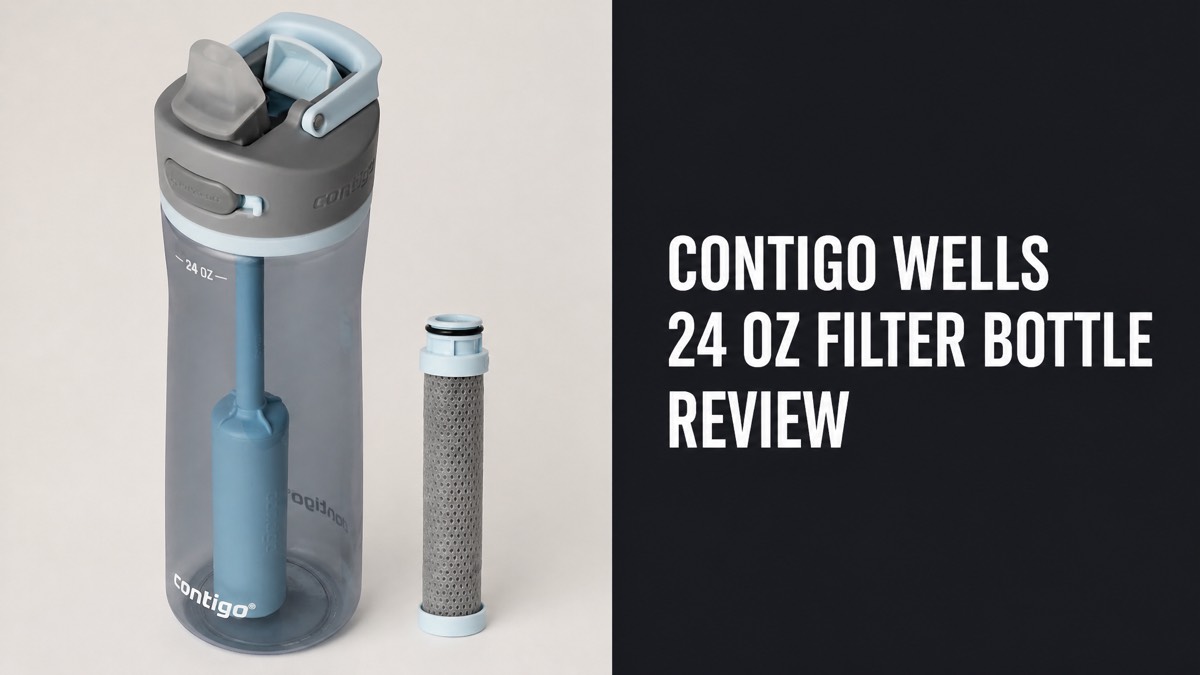
The Contigo Wells 24 oz plastic filter water bottle is a reusable straw bottle with a built-in carbon fiber filter. The filter cuts 99% of chlorine taste and odor from tap water. A leak-proof AUTOSPOUT lid and a button lock keep the contents sealed inside a bag. A spare filter ships in the box.
The filter cleans water as it travels up the straw and lasts 3 to 5 months. Owners rate the bottle 4.6 out of 5, and leak resistance leads the praise. Plastic keeps the weight low, but the body does not insulate. Cleaning takes a dishwasher and a rinse. The LifeStraw Go targets microbes, while the Wells targets taste. The bottle costs about $20.
Hard sipping, mouthpiece mold, and a lack of insulation draw the complaints. This review covers the filter, the cost, the cleaning routine, and the rivals. Each section answers one buyer question with plain facts. Read on to learn which buyers fit the Wells and which pick the stainless Chill instead.
What Is the Contigo Wells 24 Oz Plastic Filter Water Bottle?
The Contigo Wells 24 oz plastic bottle is a reusable water bottle with a built-in carbon fiber filter and a leak-proof AUTOSPOUT straw lid. Contigo sells it as model 2171285. The body is BPA-free plastic and holds 24 fluid ounces (710 milliliters).
Newell Brands owns Contigo, and the plastic Wells sits beside the stainless Wells Chill in the lineup. The bottle targets tap-water drinkers at the office, the gym, school, and in the car. And the filter cleans each sip as it goes.
Here's the size: the bottle weighs 0.73 pounds (333 grams) and stands about 11.9 inches (30.3 centimeters) tall with the lid on. The body measures roughly 3.2 by 4.0 inches (8.2 by 10.2 centimeters), so most car cup holders accept it.
What Comes in the Box?
The standard package includes the bottle, the AUTOSPOUT straw lid, and a carbon fiber filter. A replacement filter ships in the same box. Amazon's listing counts two filters in total, one fitted and one spare.
In the Box:
- 24 oz plastic bottle
- AUTOSPOUT straw lid with button lock
- Carbon fiber filter fitted to the straw
- Replacement filter
The lid carries four features: a pop-up spout, a button lock, an angled straw, and an integrated carry handle. Together they allow one-handed drinking. Why does the lock matter? The lock blocks accidental opening inside a bag.
How Does the Contigo Wells Filter Work?
The Wells filter cleans water as it travels up the straw. A carbon fiber element sits on the straw inside the bottle. Water passes through the element before it reaches the spout.
Carbon fiber media traps chlorine and the compounds behind its taste and odor. Tap water from a gym or office sink tastes cleaner after that pass. Does the system need anything extra? No. The element needs no pump, no pitcher, and no power.
The AUTOSPOUT lid controls the flow. A press of the button pops the spout up, and pushing the spout down seals the bottle. And a covered spout keeps the drinking surface away from dirt and grime.
What Does the Wells Filter Remove?
The filter reduces 99% of chlorine taste and odor. The listings state that it meets the NSF 42 standard for chlorine taste, odor, and particulates. Both claims cover taste and sediment.
Bacteria, viruses, and parasites sit outside the claim. No listing mentions them. So what does that mean? Drinkers who need that protection need a purifier instead of a taste filter.
In plain English: tap water at a gym fountain or office sink fits the design. The bottle suits water that is already safe to drink but tastes of chlorine.
How Long Does the Wells Filter Last?
A Wells filter lasts 3 to 5 months, or about 60 gallons (227 liters). Contigo rates one filter as the equal of 450 single-use bottles of 16.9 fluid ounces (500 milliliters).
The math holds up. Sixty gallons equals about 320 full refills of the 24 oz bottle. How fast does that go? Two refills a day uses the rated volume in about 160 days, so heavy drinkers land near the short end of the range.
Filter Life:
| Measure | Value |
|---|---|
| Rated life | 3 to 5 months |
| Rated volume | 60 gallons (227 liters) |
| 24 oz refills per filter | About 320 |
| Single-use equivalent | 450 bottles of 16.9 oz |
| Care | Rinse with water only |
The filters are easy to replace, and the box includes the first spare. But later spares come from separate purchases. A daily drinker buys two to four filters a year.
What Do Owners Say About the Contigo Wells Bottle?
Walmart lists the Dark Ice color at 4.6 out of 5 across 463 ratings. The Salt color holds the same 4.6 across 171 ratings. Five-star scores make up 73% of the Dark Ice total and 76% of the Salt total.
Now, watch the spread. The Dark Ice color runs 339 five-star ratings, 89 four-star, 30 three-star, 2 two-star, and 3 one-star. Are low scores common? No. Only 5 of 463 ratings fall below three stars.
Leak resistance leads the praise with 136 mentions. Ease of cleaning follows with 125, flavor with 119, and durability with 78. In short, buyers care most about spills and taste.
The good news? Complaints stay specific. Drinkers mention hard sipping through the filtered straw, no cold retention, mouthpiece mold, and one off taste from tap water.
Common Complaints:
- Hard sipping through the filtered straw
- No cold retention in the plastic body
- Mold on the mouthpiece when left dirty
- One off taste from tap water
Does the Wells Bottle Leak?
No. The lid seals whenever the straw sits down and the button lock is engaged. Leak resistance is the most common point of praise in the ratings.
Owners toss the bottle into bags and car cup holders without spills. The lock button blocks accidental opening. So the lid stays closed until someone presses it.
Here's the catch: reassembly is the weak spot. One owner was unable to refit the mouthpiece after taking it apart. A leak-proof seal depends on putting the parts back together correctly.
Is the Wells Bottle Hard to Drink From?
Yes. The filtered straw demands more suction than an open straw. A Walmart summary flags low, hard-to-sip output, and a three-star owner compares the sip to a toddler's sippy cup.
But opinion splits. The sippy-cup feel bothers some drinkers. Others find the flow free and far easier than a LifeStraw.
Why does the resistance exist? The filter causes it. And the filter is optional, so drinkers who dislike the effort can leave it out.
How Does the Contigo Wells Compare to Other Filter Bottles?
The plastic Wells competes mainly with its stainless sibling and with filter bottles from LifeStraw, BRITA, and Philips. Those brands sell 18 to 20 oz stainless models. The Wells stays the plain plastic option at 24 oz.
Weight and price favor plastic. The Wells weighs 0.73 pounds (333 grams) and sells for $19.98 at Walmart. By comparison, stainless alternatives add insulation.
How Does the Plastic Wells Differ From the Wells Chill Stainless?
The two bottles share the same filter and lid features but differ in body material. The Wells Chill uses stainless steel, and its listing says the body keeps drinks cold all day. Plastic does not insulate.
Plastic Wells vs Wells Chill:
| Feature | Plastic Wells | Wells Chill |
|---|---|---|
| Body | BPA-free plastic | Stainless steel |
| Keeps drinks cold | No | Yes, all day |
| Filter | Carbon fiber, 3 to 5 months | Carbon fiber, 3 to 5 months |
| Lid | AUTOSPOUT, button lock | AUTOSPOUT, button lock |
| Cleaning | Dishwasher-safe lid and body | Dishwasher-safe lid and body |
Cold water is the main reason to upgrade. Do plastic owners miss the chill? Yes. One wishes the water stayed colder longer, and another notes the bottle is not insulated.
At the same time, care stays the same. Both list a dishwasher-safe lid and body, and both use a filter that rinses with water only. Weight favors the plastic version.
How Does the Wells Compare to LifeStraw, BRITA and Philips?
The Wells filters for taste, while the LifeStraw Go targets microbes. The 18 oz stainless Go Series lists removal of bacteria, parasites, and microplastics. The Wells makes no such claim.
BRITA and Philips offer insulated stainless bottles in smaller sizes. BRITA's holds 20 oz (591 milliliters). Philips holds 18.6 oz (550 milliliters) and rates its filter for 2 months or 40 gallons (151 liters). The Wells filter runs longer on both counts.
Filter Bottle Comparison:
| Bottle | Size | Filter Note |
|---|---|---|
| Contigo Wells Plastic | 24 oz (710 ml) | Chlorine taste and odor, 3 to 5 months |
| LifeStraw Go | 18 oz (532 ml) | Bacteria, parasites, microplastics |
| BRITA Insulated | 20 oz (591 ml) | Insulated stainless filter bottle |
| Philips Filtered | 18.6 oz (550 ml) | Chlorine and odor, 2 months or 40 gallons |
Capacity favors the Wells at 24 oz (710 milliliters). Taste filtering fits safe municipal water. Microbe removal suits travel and camping.
Is the Contigo Wells Bottle Safe to Use?
Yes. The bottle uses BPA-free plastic and meets NSF 42 for chlorine taste, odor, and particulates. The standard covers taste and sediment, not germs.
Contigo adds a limited lifetime warranty on the bottle. Newell Brands stands behind the line. Where does the real safety task land? On the owner: keeping the spout clean.
Is the Wells Bottle BPA-Free?
Yes. The material list excludes BPA, BPS, PVC, BPF, and DEHP. Amazon's spec table carries the full list. Coleman describes the body as BPA-free plastic.
The plastic body also earns praise for toughness. Does it hold up? Durability draws 78 mentions in Walmart feedback, and a Walmart summary calls the materials shatterproof.
How Do You Clean the Wells Bottle?
Cleaning takes a dishwasher for the lid and body and a water rinse for the filter. Contigo rates both the lid and the body as dishwasher-safe. The filter takes water only.
Here is the part most people miss: mold forms where the mouthpiece stays damp. One owner found mold after two weeks and then was unable to refit the part. A buyer also asked whether the filter blocks mold and mildew. The listing makes no such claim.
Habit matters more than design. Take the spout apart, wash it, and let every part dry. A covered spout stays cleaner between washes.
How Much Does the Contigo Wells Bottle Cost?
The plastic Wells costs about $20 at Walmart. Walmart lists the Salt color at $19.98 with free 90-day returns. Coleman lists the bottle at $32.99 but shows it out of stock.
Filter swaps add a running cost. One filter lasts 3 to 5 months. What does that mean per year? A daily drinker buys two to four filters. The box includes the first spare.
Is the Wells Bottle Worth the Price?
Yes. The bottle costs far less per drink than single-use bottled water. One filter replaces the equal of 450 single-use bottles, and the bottle itself sells for $19.98 at Walmart.
Value depends on the drinker. Cold-drink fans pay more for the stainless Chill. And drinkers who dislike the filtered sip get less from the design.
A limited lifetime warranty lowers the risk. Buyers who hit a defect have a path to a replacement.
Where Can You Buy the Wells Bottle?
Retailers that stock the plastic Wells include Walmart, Amazon, Coleman, eBay, and Forza Sports. Walmart ships the Salt color directly. Forza Sports reports more than 100,000 units sold.
Stock changes by color. Dark Ice shows as backordered at Forza Sports, and Coleman lists the bottle as out of stock. So check the color before ordering.
Is the Contigo Wells Bottle Worth It?
Yes. The Wells earns a recommendation for drinkers who want cleaner-tasting tap water in a light, leak-proof bottle. Ratings sit at 4.6 out of 5, and the filter cuts 99% of chlorine taste and odor.
Bottom line: the trade-offs are plain. The filtered straw takes effort, the plastic body does not insulate, and the mouthpiece needs regular cleaning. Buyers who accept those three get a dependable bottle.
Pros:
- Filter cuts 99% of chlorine taste and odor
- Leak-proof AUTOSPOUT lid with button lock
- Light plastic body at 0.73 pounds
- Dishwasher-safe lid and body
- Spare filter included
Cons:
- Filtered straw takes extra suction
- Plastic body does not insulate
- Mouthpiece needs regular cleaning
- Filter does not remove microbes
Who Should Skip the Wells Bottle?
Three groups fit another bottle better: cold-drink fans, drinkers who need microbe removal, and anyone who dislikes sipping through a filter.
Each group has a fix. Cold-drink fans pick the Wells Chill. Microbe protection points to the LifeStraw Go. And drinkers who dislike the resistance can leave the filter out, since the filter is optional.
Pop Kitchen is a reader-supported platform. Purchases made through our links may earn us an affiliate commission at no extra cost to you.