
Clearly Filtered Water Filter Pitcher Review: Is It Worth the Price?
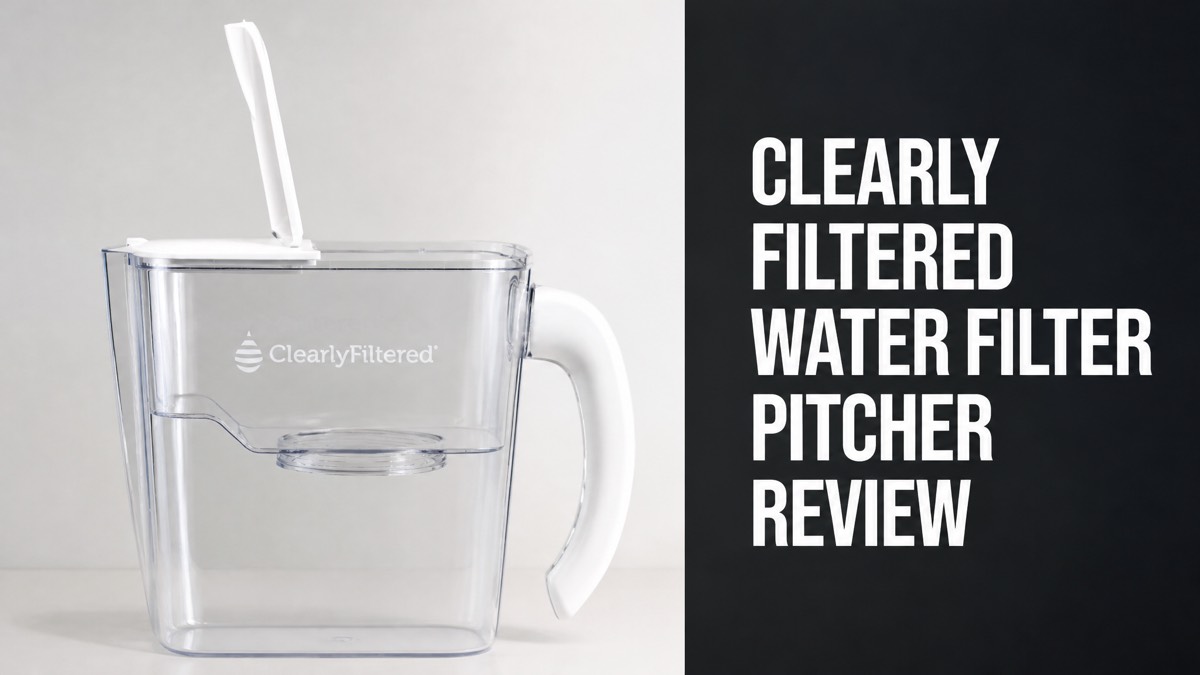
The Clearly Filtered pitcher is a gravity-fed countertop water filter built in the USA from medical-grade Tritan. It holds 80 ounces (2.4 liters) in the lower reservoir and 64 ounces (1.9 liters) in the upper one. Retail price runs roughly $80 to $100.
The pitcher cuts lead, PFAS, fluoride and chromium-6 in published lab tests, and it leaves healthy minerals in the water. Four NSF/ANSI standards appear on its data sheet. The filter lasts about 100 gallons, or four months. Flow is slow, and each replacement cartridge costs about $55. The brand also locks buyers into its own filters.
Independent testing backs the headline claims but not every long-tail one. Sulfate and nitrate results fell far short of the brand's numbers. Read on for the contaminant results, the honest complaints and the Brita and Epic Pure comparisons. The last section covers who should skip it.
What Is the Clearly Filtered Water Filter Pitcher?
The Clearly Filtered pitcher is a gravity-fed countertop water filter pitcher built in the USA from medical-grade Tritan plastic. To be clear, the brand sells it as a step above basic carbon pitchers. Tap water goes in the top reservoir, and gravity pulls it through the filter. Simple, right?
The lower reservoir holds 80 ounces (2.4 liters) and the upper reservoir holds 64 ounces (1.9 liters). The empty pitcher weighs 2.8 pounds (1.3 kilograms). Its footprint measures about 10.9 by 5.3 by 11.4 inches (27.6 by 13.3 by 29 centimeters). That fits most refrigerators.
Retail price lands between roughly $80 and $100. Promotions move it around. Is that expensive? Next to a basic Brita-style unit, yes. The extra money buys a much longer published contaminant list than commodity pitchers offer.
Who Is the Clearly Filtered Pitcher Built For?
The pitcher suits people who can't install an under-sink system. Renters, students in dorms, and anyone in temporary housing can use it without touching the plumbing. A household of two to three people matches the reservoir size and the filter cycle well.
Portability is a real selling point. The compact body travels to hotels, rental homes and RV trips. A pitcher in an unfamiliar kitchen gives some peace of mind. Pitchers still sit below under-sink and reverse osmosis systems for thoroughness.
How Does the Clearly Filtered Pitcher Work?
The pitcher pushes tap water through a multi-stage filter cartridge using gravity alone. No pump or power is involved. Water poured in the top reservoir drips through the cartridge into the lower reservoir. A built-in dam keeps unfiltered water from sloshing over when you pour.
Here's the trade: slow flow is the price of thorough filtering. Longer contact time between water and filter media gives better reduction percentages. Fill the top reservoir, walk away, and come back later. Nobody gets instant filtered water from this design.
A new filter needs priming before first use. The box includes a priming bag and instructions. Skipping this step can hurt early performance. Why does that matter? A cartridge that is not primed doesn't perform at its best from the first pour. Replacement filters ship on a subscription option, which helps owners keep the schedule.
How Many Filtration Stages Does It Have?
The cartridge uses three stages. A stainless steel mesh catches medium to large particles. Granulated coconut carbon then removes fine particles that cause bad taste and odor. A proprietary composite shell is the final stage and retains most heavy metals, organics and chemicals.
One long-term user argues that only two of the three layers do meaningful filtering. The top screen mostly acts as a sediment barrier. The marketing label of three stages is accurate on paper, but carbon and the composite shell carry the real load.
What Does the Clearly Filtered Pitcher Remove?
The brand claims the filter reduces up to 365 contaminants, such as lead, fluoride, PFAS, chromium-6, arsenic, microplastics and pharmaceutical residues. The published data sheet names reduction percentages for individual contaminants. Few pitchers publish numbers this specific. And that matters for a skeptical buyer.
The headline numbers come from testing at IAPMO New Jersey, a lab that was formerly called QFT. Lead drops by 99.34 percent. PFOA and PFOS both fall past 99 percent. Chromium-6 drops by 99.68 percent. The table below lists the main results.
Published Reduction Results:
| Contaminant | Reduction |
|---|---|
| Lead | 99.34% |
| PFOA | Over 99.00% |
| PFOS | Over 99.50% |
| Fluoride | Over 99.54% |
| Chromium-6 | 99.68% |
| Arsenic | 98.00% |
| Microplastics | Over 99.99% |
PFAS matters because the EPA finalized limits of 4 parts per trillion for PFOA and PFOS in April 2024. Utilities must comply by 2029. So where does the pitcher stand? Its published PFAS results sit well below that threshold. Home filtering still helps in the years before utilities catch up.
Does the Clearly Filtered Pitcher Remove Fluoride?
Yes. The pitcher removes fluoride, and the published test shows a reduction above 99.54 percent. That is rare for a pitcher. Activated carbon alone doesn't target fluoride. So why does this one manage it? The media blend in the cartridge, and it is the reason buyers pay extra.
Independent lab work from Water Filter Guru confirmed the fluoride result. The same lab also confirmed strong reduction of uranium and trihalomethanes. Independent confirmation of the headline claim is the strongest evidence in the pitcher's favor.
But not everyone agrees. One long-term user says fluoride removal at this price deserves skepticism. Fluoride normally needs reverse osmosis, activated alumina or bone char. The lab data favors the brand. Buyers with a fluoride concern should still test their own water.
Does the Clearly Filtered Pitcher Keep Healthy Minerals?
Yes. The filter leaves beneficial minerals such as calcium, magnesium and potassium in the water. The brand and several testers point to this as a key difference from filters that strip everything out. The water still tastes crisp and clean.
Chlorine reduction is the most noticeable benefit. Why? Chlorine drives most of the bad smell and taste in municipal water. Owners often drink more water after switching because it tastes better. Many users call the taste a big step up from other pitchers.
Is the Clearly Filtered Pitcher Certified?
Yes. The brand states the pitcher is independently tested to comply with NSF/ANSI standards 42, 53, 401 and P473. Four standards on one data sheet is unusual for a pitcher. Most competitors cover one or two. Each standard covers a different type of claim.
What Each Standard Covers:
- NSF/ANSI 42 covers aesthetic effects such as chlorine taste and odor
- NSF/ANSI 53 covers health effects such as lead and cysts
- NSF/ANSI 401 covers emerging contaminants such as pharmaceuticals and pesticides
- NSF/ANSI P473 covers PFOA and PFOS reduction
Here's the catch: the wording matters. The pitcher is tested to comply with these standards by an ANSI-accredited, ISO 17025 lab. It is not listed in the NSF International database. The listing lives with IAPMO instead. Buyers who want to find the NSF mark by search won't find this brand there.
How Do Independent Tests Compare to the Brand's Claims?
The headline claims held up in independent testing for the contaminants that drive most purchases. Lead, PFAS, fluoride and chromium-6 results matched the brand's numbers. Those four are the reasons most buyers choose a premium pitcher.
Long-tail contaminants did not match. The bad news? Water Filter Guru measured sulfate reduction of 3 percent against a claim of 99.88 percent. Nitrate reduction came in at 11 percent against a claim of over 99.96 percent. Several minor metals also fell short. Buyers worried about sulfate or nitrate should look elsewhere.
What Are the Pros and Cons of the Clearly Filtered Pitcher?
The pitcher trades speed and price for the broadest contaminant coverage in the pitcher category. Strengths cluster around filtering and materials. Weak points cluster around cost, flow rate and build details. The lists below split the two sides.
The tradeoffs matter differently for each household. Which side wins? That depends on the buyer. A buyer with fluoride or chromium-6 on the priority list will accept a slow pour. A buyer who only wants better chlorine taste won't. Know your own priority before weighing the list.
What Do Owners Like About It?
Owners praise the clean taste, the contaminant scope and the safe materials. Many say the water tastes better than with other pitchers. The Tritan body is BPA-free and leaves nothing behind in the water. The 4.0 star average on Amazon across more than 450 reviews backs the general mood.
Main Pros:
- Broad published contaminant list
- Fluoride reduction above 99 percent
- Keeps calcium and magnesium
- Medical-grade Tritan body built in the USA
- 100 gallon filter life
And a longer filter cycle means fewer cartridge changes than cheaper pitchers need. The pitcher also replaces single-use plastic bottles. Easy-fill lid and comfortable handle round out the daily experience. The 2024 redesign improved both.
What Are the Common Complaints?
The top complaint is slow filtering. Independent testing measured about 2.27 gallons (8.6 liters) per hour, against about 2.92 gallons (11 liters) for Brita Elite. A full upper reservoir takes over an hour to drain. Is the pitcher easy to lift afterwards? Not really, because it is heavy once filled.
Some owners report a flimsy handle and a few report side leaks. Others say flow stops after a few weeks, and filter life varies by water quality. The design also makes cleaning the corners awkward. Shipping damage shows up in a few reviews.
Main Cons:
- Higher upfront price than basic pitchers
- Slow filtering speed
- Heavy when full
- No filter change indicator
- Proprietary replacement cartridges
The cartridge is proprietary. In plain English: generic pitcher filters won't fit. The pitcher also lacks a filter change reminder, so owners must track the date or watch for slowing flow. A calendar or the subscription option solves most of the guesswork.
How Does Clearly Filtered Compare to Brita, Epic Pure and ZeroWater?
Brita Elite wins on price and on a searchable NSF listing, while Clearly Filtered wins on contaminant scope. Brita Elite costs about $35 and lasts about 120 gallons. It targets lead and PFOA/PFOS but doesn't target fluoride, chromium-6, arsenic or pharmaceutical residues.
Pitcher Comparison:
| Pitcher | Price | Filter Life |
|---|---|---|
| Clearly Filtered | About $90 | 100 gallons |
| Brita Elite | About $35 | 120 gallons |
| Epic Pure | About $70 | About 150 gallons |
| ZeroWater | Lower than Clearly Filtered | 15-25 gallons |
Epic Pure is the closest rival. It costs about $70 and lasts about 150 gallons, with similar multi-stage carbon chemistry. The chemistry gap between the two is thin. Clearly Filtered has the larger reservoir and the longer named-contaminant list. Epic Pure has the lower price.
ZeroWater filters last only 15 to 25 gallons in typical municipal water. Clearly Filtered lasts about 100 gallons and keeps minerals in the water. ZeroWater costs less up front, but its short filter life means more cartridge changes.
Is Clearly Filtered Better Than Brita?
Yes. The pitcher beats a standard Brita-style pitcher on filtering power. Basic carbon pitchers mainly improve taste and remove chlorine odor. Clearly Filtered adds stronger chlorine reduction, sediment removal and some microplastic reduction, plus the extra contaminants on the data sheet.
Brita Elite is the exception. A buyer who only cares about PFOA and PFOS gets direct NSF/ANSI P473 certification. The price is about a third. Clearly Filtered earns its premium only when the contaminant list runs longer than lead and PFAS.
How Much Does the Clearly Filtered Pitcher Cost?
The pitcher costs about $80 to $100 up front, with $90 as the middle figure. Buying direct from the manufacturer often costs less than third-party sellers, though the gap varies by retailer.
Running costs add up. Replacement filters cost about $55 each, and a household of two to three uses about three per year. Filters alone run about $165 per year once the first cartridge is used up.
Estimated Cost:
| Item | Cost |
|---|---|
| Pitcher with first filter | About $90 |
| Replacement filter | About $55 each |
| Replacements per year | About 3 |
| Filters per year | About $165 |
How Long Does a Clearly Filtered Filter Last?
Each filter is rated for 100 gallons (379 liters). That equals about 200 pitcher refills, or roughly four months for a typical household. Heavy drinkers go through it faster. One gallon per day uses the filter up in just over three months.
A spent filter stops doing its job. What happens at capacity? A cartridge that reaches it filters very little until replaced. The pitcher works well only when owners change filters on time. Slowing flow is the practical warning sign, and some owners report it after only three to four weeks.
Is the Clearly Filtered Pitcher Worth It?
Yes. For the right buyer, the pitcher earns its premium when the contaminant list extends past lead and PFAS. Fluoride, chromium-6 and pharmaceutical residues are rare on pitcher data sheets. Independent lab work supports the main claims.
Now, the costs are real. The price runs about $90, filters cost about $55 each, and flow is slow. Is it a replacement for an under-sink or reverse osmosis system? No. Weighed together, the pros win for buyers who need the broader coverage and lose for buyers who don't.
Who Should Skip the Clearly Filtered Pitcher?
Short answer: three buyers should look elsewhere. Someone who only cares about PFOA and PFOS gets the same validation from Brita Elite for less. Someone who only wants better chlorine taste doesn't need a $90 pitcher. Someone who must verify the mark in the NSF database won't find this brand there.
Skip It If:
- PFOA and PFOS are your only concern
- Chlorine taste is your only complaint
- You need an NSF database listing
- You need sulfate or nitrate reduction
A buyer who wants the widest possible coverage needs a different tool. Countertop reverse osmosis covers more contaminants but costs about $449 and takes counter space. Under-sink systems need installation. The pitcher sits in the middle: broader than Brita, simpler than the rest.
Pop Kitchen is a reader-supported platform. Purchases made through our links may earn us an affiliate commission at no extra cost to you.