
ClaroSwiss Water Filter Review: Is It Worth It?
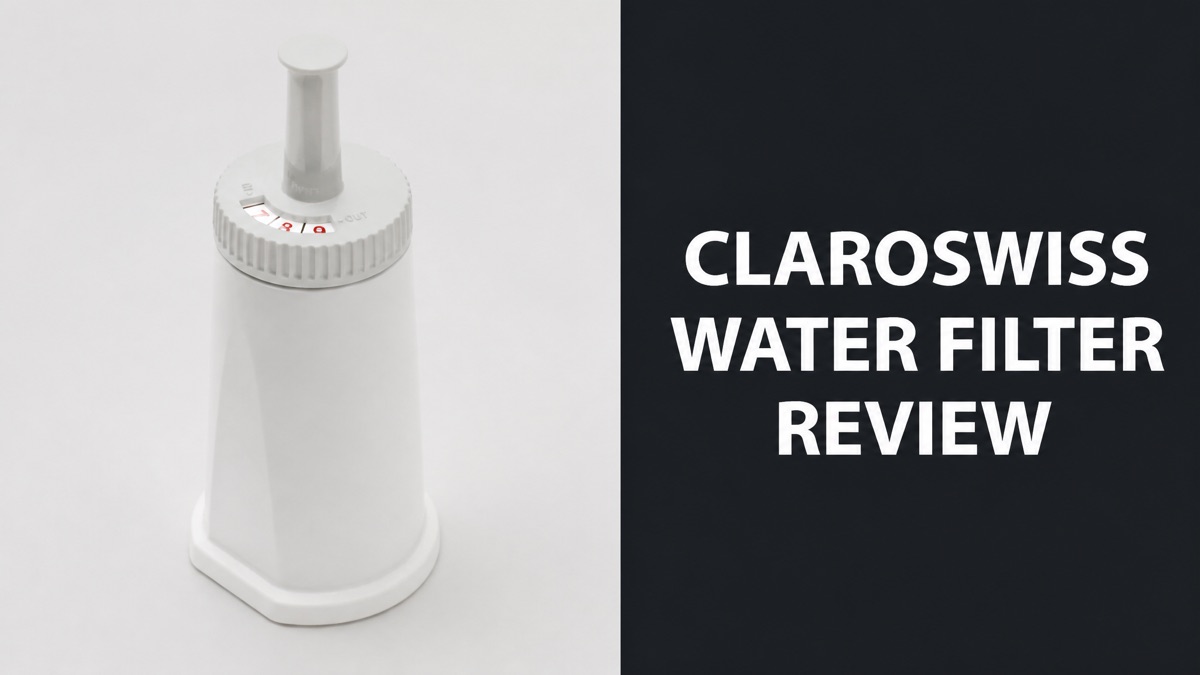
The Breville ClaroSwiss water filter is a replacement cartridge for select Breville espresso machines. It sits in the water tank and reduces chlorine, heavy metals, and minerals before the water reaches the boiler. Breville recommends swapping it every 90 days to protect the machine from scale.
The filter improves taste mainly by removing chlorine. It also cuts mineral and scale buildup inside the machine, which means fewer descale alerts and a longer working life for the boiler. Installation takes five short steps and no tools. The original cartridge fits a short list of Breville models, while third-party filters cost far less but vary in quality and fit.
Owners rate the filter highly, with complaints centered on price and fit confusion. This review covers compatibility, replacement timing, yearly costs, and alternatives such as a Brita pitcher, so you can decide whether the filter earns a place on your machine and how often to swap it.
What Is the Breville ClaroSwiss Water Filter?
The Breville ClaroSwiss water filter is a replacement cartridge that treats the water going into select Breville espresso machines. The cartridge sits in the water tank and cleans the water before it reaches the boiler. The US part number is BES008WHT0NUC1.
Breville sells the cartridge singly and in two-packs. The single carries model number BES008, and the Australian two-pack carries BCC009WHT0ZAN1. Retailers list both under the ClaroSwiss name.
The filter targets three problems in tap water: chlorine, heavy metals, and minerals. Breville pitches the result as better-tasting espresso and a longer machine life.
Which Espresso Machines Does It Fit?
The ClaroSwiss filter fits five Breville models in the US lineup. Those are the Oracle Touch (BES990), Oracle (BES980), Dual Boiler (BES920), Barista Touch Impress (BES881), and Barista Touch (BES880).
Australian listings extend the list. They add the Oracle Dual Boiler (BES995), the Oracle Jet (BES985), and the Bambino (BES450). Canadian listings also name the Barista Pro (BES878).
Compatible Models:
- Oracle Touch (BES990)
- Oracle (BES980)
- Dual Boiler (BES920)
- Barista Touch Impress (BES881)
- Barista Touch (BES880)
- Oracle Dual Boiler (BES995)
- Oracle Jet (BES985)
- Bambino (BES450)
- Barista Pro (BES878)
Batch codes matter on older machines. Retailers list the Oracle Touch as batch 1747 and newer, the Oracle as batch 1814 and newer, and the Barista Touch as batch 1801 and newer.
Compatibility lists differ by retailer and region. So what does that mean for you? Confirm the batch code on the machine against the listing before checkout.
How Does the ClaroSwiss Filter Work?
The filter cleans the water inside the tank before the machine uses it. Water passes through the cartridge as the machine draws it. The treated water then feeds the boiler and the brew path.
A Breville cartridge is charcoal-based. What do third-party versions add? An ion-exchange resin paired with activated carbon, which targets mineral buildup.
Carbon pulls out chlorine and odors, the flavors most people taste. Ion exchange handles the minerals that form scale. Each material covers a different problem.
A new cartridge needs a short soak first. Place it in cold water for 5 minutes, then seat it in the holder inside the tank.
What Does the Filter Remove From Water?
The filter reduces chlorine, heavy metals, and minerals. Breville lists those three on its ClaroSwiss product pages. Chlorine affects taste, and minerals drive scale.
Hard water carries dissolved calcium and magnesium. Why does that matter? Those minerals build scale on the thermocoil and boiler, and a filter that cuts minerals slows that buildup.
Hardness runs from soft (0-60 ppm) through moderately hard (61-120 ppm) and hard (121-180 ppm) to very hard (above 180 ppm). In plain English: moderately hard water suits espresso best.
Water Hardness Levels:
| Level | Range (ppm) |
|---|---|
| Soft | 0-60 |
| Moderately hard | 61-120 |
| Hard | 121-180 |
| Very hard | Above 180 |
What Are the Benefits of the ClaroSwiss Filter?
The ClaroSwiss filter delivers two main benefits: better-tasting espresso and a longer-lived machine. Breville claims both on its product page. Owners also report cleaner flavor and fewer descale alerts.
The filter adds smaller perks too. It reduces chlorine odor, trims scale buildup, and gives a dial for tracking replacement dates. Each perk comes from the cartridge design.
The benefits scale with water quality. Who gains the most? Hard, chlorinated tap water does. Soft or already filtered water gains little.
Does It Really Reduce Scale?
Yes. The ClaroSwiss filter reduces mineral and scale buildup inside the machine. Breville states that the cartridge protects against scaling, which extends appliance life.
Home baristas judge the effect through descale alerts. A light that once came on every few weeks stops doing so after the filter goes in.
The filter doesn't end descaling. Why not? Very hard water still builds scale over time. Set the machine hardness level correctly and descale when the alert appears.
Does It Improve Espresso Taste?
Yes. The filter improves taste mainly by removing chlorine. Chlorine adds a metallic edge that masks coffee flavor, and carbon filtration strips it out.
Owners describe the change as subtle but real. What changes in the cup? Shots taste cleaner with less chalkiness. Tap water that already tastes clean shows a smaller difference.
Minerals also shape extraction. Water that is too soft tastes flat, and water that is too hard tastes harsh. A filter that cuts hardness while keeping some minerals protects flavor and machine alike.
What Do Owners Say About the ClaroSwiss Filter?
Owner feedback on the ClaroSwiss filter skews strongly positive. The single-pack listing at one major retailer holds 4.7 out of 5 across 4,140 ratings. The two-pack lists 5.0 out of 5 from 8 ratings.
Praise centers on easy installation and cleaner-tasting shots. Complaints center on price and compatibility confusion. The next two sections split those themes.
What Do Owners Like?
Owners like the simple setup and the cleaner flavor. The cartridge drops into the tank holder in a few steps. The date dial removes guesswork about replacement.
Fewer descale alerts rank as a second favorite. Machines run longer between descaling cycles. That cuts routine maintenance.
An original cartridge also brings peace of mind. Fit is guaranteed and quality stays consistent. Breville-branded parts can help keep warranty coverage intact.
What Are the Common Complaints?
The top complaint is the cost of repeat replacements. A cartridge needs swapping about every 90 days. Over a year, four filters add up.
Black carbon specks rank second. Where do they come from? Specks appear in the first shots when the owner skips the 5 minute soak. Running hot water through the group head for 10-15 seconds clears them.
Compatibility confusion ranks third. Batch codes and regional model numbers (BES008, BCC009) differ across listings. Buyers who skip the batch check risk a cartridge that doesn't fit.
How Do You Install the ClaroSwiss Filter?
Installation takes five short steps and no tools. Soak the new filter, set the date dial, seat it in the holder, refill the tank, and prime it. The 5 minute soak is the longest wait.
Start by soaking the cartridge in cold water for 5 minutes. Shake it gently underwater to release carbon dust. Then turn the date dial to the current month.
Next, remove the tank and empty it. Press the soaked filter into the holder at the base until it clicks. Fill the tank to the MAX line and slide it back in.
Finish by priming the filter. Lock an empty portafilter into the group head and run hot water for 10-15 seconds into a container. Discard that water to flush leftover carbon.
Steps:
- Soak the cartridge in cold water for 5 minutes and shake it gently
- Set the date dial to the current month
- Empty the tank and press the filter into the holder until it clicks
- Fill the tank to the MAX line and slide it back in
- Run hot water through an empty portafilter for 10-15 seconds and discard it
How Often Should You Replace It?
Breville recommends replacing the ClaroSwiss filter every 90 days. The date dial on the cap tracks the schedule. A calendar reminder works just as well.
Heavy use can shorten that window. By how much? Breville-style cartridges are commonly rated for roughly 50-70 liters (13-18 gallons) of water. Some guides list two months as the replacement point.
Watch for warning signs. Slow water flow, a returning chlorine taste, black particles, and earlier descale alerts all point to an exhausted filter. Replace it as soon as any one appears.
Replace When You See:
- Slow water flow
- A returning chlorine taste
- Black particles
- Earlier descale alerts
How Does the ClaroSwiss Filter Compare to Generic Filters?
Third-party filters cost 50-70% less but vary in quality. Compatible cartridges sell in two, three, four, and six packs. Some work well and some fit poorly.
Generic makers advertise coconut activated carbon plus ion-exchange resin. One lists NSF testing and a 3 month life with a date dial. Specifications match the original on paper, but results vary by brand.
Australian listings show three-packs near A$19.99 and two-packs near A$16.95. A single original runs about A$21.56. Here's the kicker: the per-filter gap is large.
Approximate Prices (Australia):
| Option | Pack | Price |
|---|---|---|
| Original ClaroSwiss | Single | A$21.56 |
| Third-party | 3-pack | A$19.99 |
| Third-party | 2-pack | A$16.95 |
Here's the practical path. Use original filters through the first year to learn what normal performance feels like. Then trial a well-rated generic and switch back if flavor drops or scale returns.
Is a Brita Pitcher a Substitute?
No. A Brita pitcher is a partial swap at best for the ClaroSwiss filter. Standard Brita carbon filters reduce chlorine and some metals but don't soften water.
A pitcher still improves taste. Pour the filtered water into the tank, and the chlorine flavor drops. The extra step adds work, and a skipped refill means unfiltered water.
But the pitcher wins on versatility. It filters water for drinking and cooking as well. The standard Brita filter lasts about 40 gallons (151 liters) or two months.
How Much Does the ClaroSwiss Filter Cost?
A single ClaroSwiss filter costs about C$25 in Canada and about A$22 in Australia. Canadian retailers list C$24.99 before tax. Australian offers start near A$21.56. US prices vary by seller.
Yearly cost follows the schedule. What does that add up to? One cartridge every 90 days means four per year. At about A$21.56 each, the original runs near A$86 a year.
Two-packs lower the unit price. Retailers sell them under model BCC009. Third-party multipacks cut the cost further.
Is It Worth the Price?
Yes. The ClaroSwiss filter is worth the price for owners with hard or chlorinated tap water. A filter costing about A$86 a year protects a machine that costs far more.
Value drops for owners with soft, clean water. Why? The filter has less to remove. A hardness test comes first for those owners.
Test strips settle the question. Most Breville machines include hardness strips. Dip one in tap water for 1-2 seconds, then compare the color after 30-60 seconds.
Where Can You Buy the ClaroSwiss Filter?
Retailers stock the ClaroSwiss filter in store and online. Williams Sonoma, Best Buy Canada, Kitchen Therapy, and Popover list it. Amazon, eBay, and Walmart carry compatible versions.
Buy the genuine product from an authorized seller when possible. Look for the ClaroSwiss name and part number BES008WHT0NUC1. Third-party listings usually say 'compatible with' instead.
Stock varies by region and machine batch. Verify the machine model against the listing before checkout.
Is the ClaroSwiss Water Filter Worth It?
Yes. The ClaroSwiss filter is a worthwhile upkeep item for compatible Breville espresso machines. It reduces chlorine, heavy metals, and minerals, protects against scale, and costs a few dollars a month.
To put it simply, the pros are easy installation, cleaner-tasting espresso, fewer descale alerts, and a date dial. The cons are recurring cost, a 90 day replacement cycle, a soak-and-prime routine, and compatibility checks.
Pros:
- Easy installation
- Cleaner-tasting espresso
- Fewer descale alerts
- Date dial for tracking
Cons:
- Recurring cost
- 90 day replacement cycle
- Soak-and-prime routine
- Compatibility checks
Bottom line: buy it. The recurring cost is small next to a repair or a replacement machine, and hard or chlorinated water makes the case strongest.
Who Should Skip the ClaroSwiss Filter?
Owners with soft, clean tap water gain little from the ClaroSwiss filter. A hardness test confirms it. Water below 60 ppm already lacks extraction minerals.
Owners of incompatible machines need a different filter. The cartridge fits only the listed Breville models and batches. Other brands use their own cartridges.
Budget-focused owners have an alternative. A well-rated third-party cartridge costs far less. The trade is lower certainty about fit and quality.
Pop Kitchen is a reader-supported platform. Purchases made through our links may earn us an affiliate commission at no extra cost to you.